
























Article written by Malo Lecoursonnais on July 20, 2026
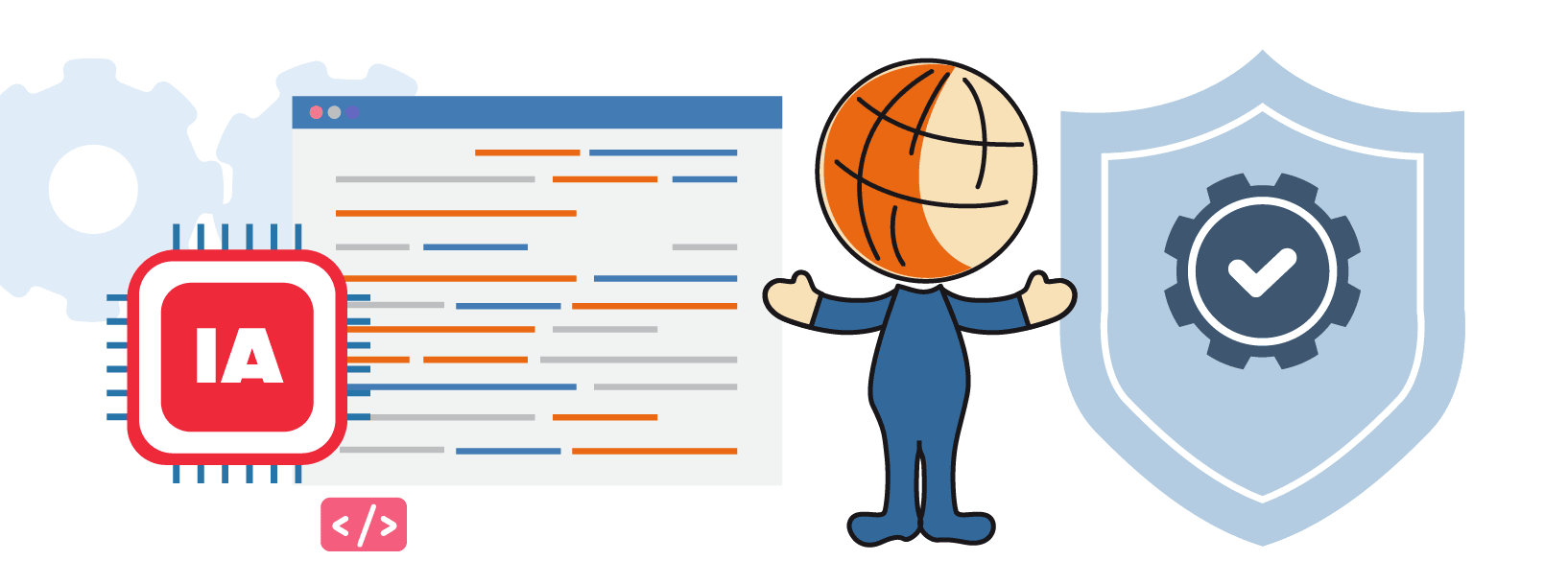
AI agents, whatever form they take, are having a greater impact on software development than on virtually any other field. While their impact on modern code is already well established, this blog series aims to provide all the keys needed to bring this revolution to the legacy world, and more specifically to IBM i.
A Revolution in Software Development
AI agents are at the heart of a complete transformation of development environments. Developers are evolving into architects, while CTOs are looking ahead by integrating generative AI into their IDEs.
The promised benefits are clear and highly compelling across a wide range of tasks: writing clean code, analyzing functions, suggesting new features, and more.
Emerging Challenges
In practice, however, the limitations of LLMs quickly become apparent. These models have been trained on extremely large datasets, which explains their widely recognized reasoning capabilities.
However, this broad training makes Claude, GPT, and Gemini generic models designed to respond to any user, regardless of the company they work for.
Yet every application landscape has its own specific characteristics, naming conventions, architectures, and coding practices.
Determinism as AI’s Compass
To adapt an agent to its users, it must be provided with information and context about its working environment. These requirements can be divided into three areas:
- The added value provided by third-party software already used by developers, such as ticket management and code version control tools
- The development teams’ working processes
- The mapping and technical architecture of the code
Two key pillars of agentic AI make it possible to provide the AI with this information. MCP servers allow AI to interact with third-party services (1), while skills and rules configuration files guide the AI using predefined processes and scenarios (2).
For IBM i environments, ARCAD provides its own MCP server, preconfigured with skills and integrated with all its DevOps solutions. It also addresses the challenge of mapping the IBM i application landscape (3) through a repository that is updated in real time and can be queried by the AI agent.
In this specific context, ARCAD guarantees the source of truth: determinism supporting the probabilistic nature of the agent.
This article is part of the AI on IBM i series:
- AI on IBM i: demystifying MCP, the toolkit for agents
- AI on IBM i: turn your expertise into skills
- AI on IBM i: agentic AI for modernization, ARCAD for reliability
- AI on IBM i: a real-world use case of modernization made faster and safer (coming soon)

About the Author
Malo Lecoursonnais
Solution Architect
Malo holds a degree from IMT Atlantique and specializes in the integration of AI solutions for IBM i and modern environments. As Solutions Architect at ARCAD, he supports our clients in modernizing their application portfolio, from design through to implementation, with a relentless focus on user experience.
His expertise with AI tools and his product vision feed directly into the evolution of Gianni and ARCAD MCP Server, helping IBM i teams regain mastery of their code. Drawing on international experience and a passion for teaching, he helps spread best practices in AI development internationally.

REQUEST A DEMO
Let’s talk about your project!
Speak with an expert